LIFT is seeking for partners interested in the conservation of threatened amphibians, reptiles and insects in Cameroon. Current efforts are focused on the conservation of edible frog species (the Goliath and the hairy frog species), Mountain chameleons and highly commercialized beetle species.
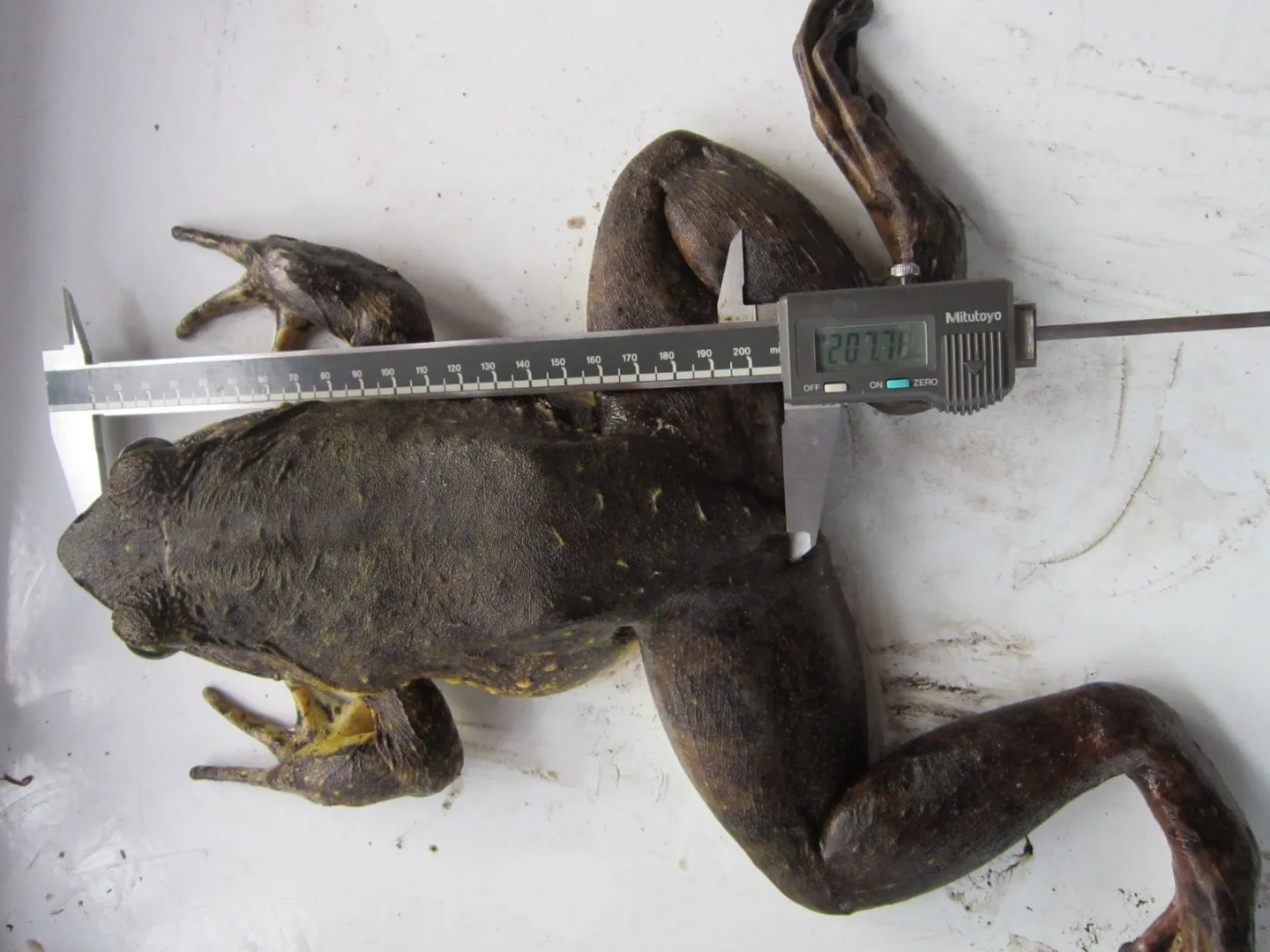
The Goliath frog (Conraua goliath)
This species of the family Ranidae is the world’s largest frog, endangered and largely exploited for food in Cameroon. It is known to occur in a very small range in the rain forests of Cameroon and Equatorial Guinea in Central Africa. This IUCN Red List species lives in rocks around rapids and cascades of rivers. They are nocturnal and only come out at night to look for food. The body length of adults ranges between 20 cm and 32 cm, and can reach a maximum of 75 cm when the length of the extended legs is considered. Some big adults can weigh up to 3.5 kg. The distribution range of this frog in Cameroon has been identified across the South, Southwest and Littoral regions, but efforts are on to discover new habitats, as well as outline the major conservation threats to this species.
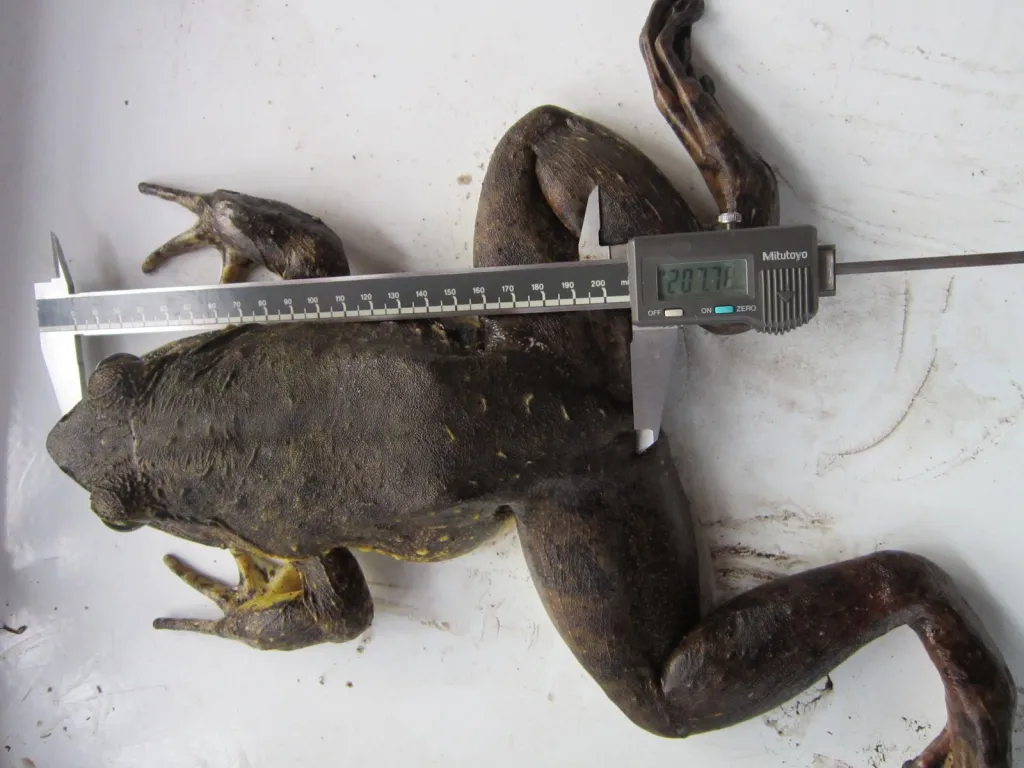
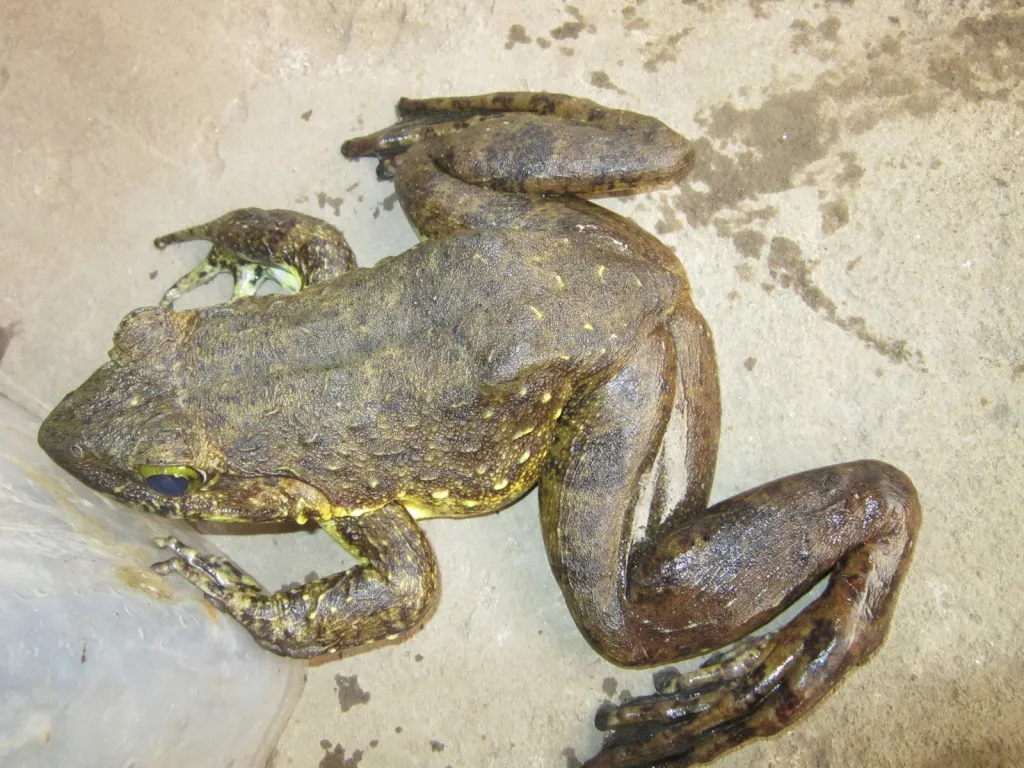
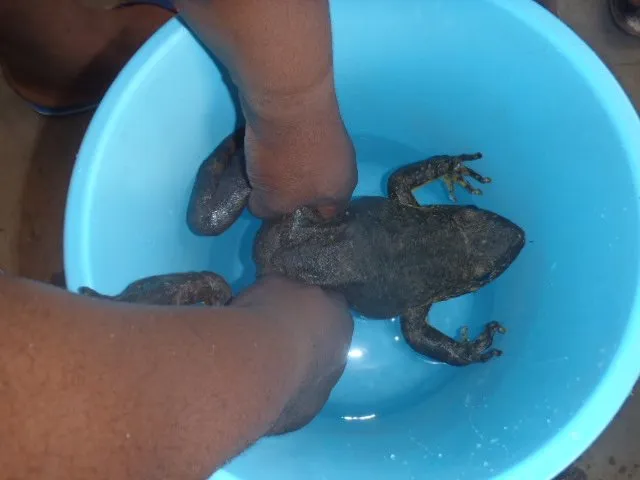
The hairy frog (Trichobatrachus robustus)
This frog of the family Arthroleptidae is native to the highland streams of the Cameroon rain forest, which extend to Nigeria, Equatorial Guinea, Gabon and the Democratic Republic of Congo, and is presumed to occur in Congo and Angola. It is largely captured for food in the Littoral and Southwest regions of Cameroon. This frog does not only grow hair-like tendrils, but equally has the ability to intentionally break its own bones as a defense mechanism against predators. Despite the fact that this frog is not considered endangered, it suffers from decreasing population, due to habitat pollution, reduction of water volume and continuous exploitation for food and trade.
Mountain chameleons
Many species of endemic chameleons are largely exploited for pet trade in Cameroon. They include: the Eisentraut’s chameleon (Chamaeleo eisentrauti), the Mountain chameleon (Chamaeleo montium), the Pfeffer’s chameleon (Chamaeleo pfeffer), the Northern Four-horned chameleon (Chamaeleo quadricornis gracilior), the Southern Four-horned chameleon (Chamaeleo quadricornis quadricornis), the Southern Peacock chameleon (Chamaeleo wiedersheimi perreti) and the Northern Peacock chameleon (Chamaeleo wiedersheimi wiedersheimi). These species of chameleons are amongst the protected reptiles in Cameroon, but they still suffer from decreasing populations due to habitat destruction and exploitation for pet trade.
Highly commercialized beetles of Cameroon
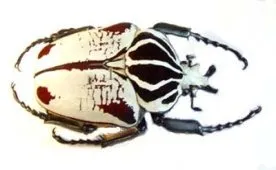
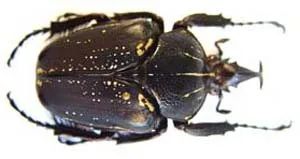
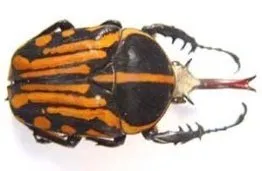
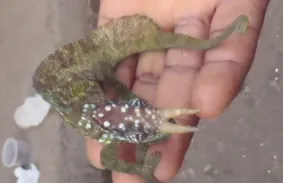
Four species of beetles are over-exploited for pet trade in Cameroon, amongst which include Goliathus goliatus, Fornasinius aureosparsus, Chelorrhina kraatzi and Stephanocrates preussi. Current state of knowledge on their distribution range is less adequate, but spot-like occurrence is known to exist along the humid forest ecosystems of the Cameroon volcanic belt. The known ranges of these insects in Cameroon are mostly found in biotopes outside protected ecosystems. Consequently, their habitats suffer from increasing fragmentation and/or loss due to forest degradation and deforestation from agro-pastoral expansion and timber exploitation. The intense anthropic encroachment is therefore a major threat to these endemic species with spotted distribution.